ADVANCED CERAMICS
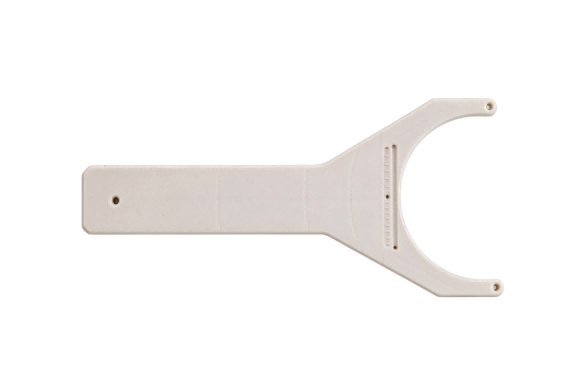
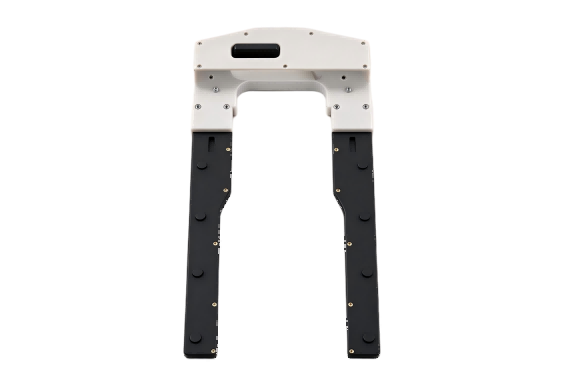
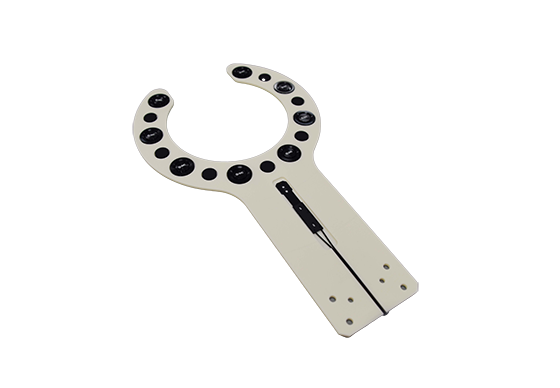
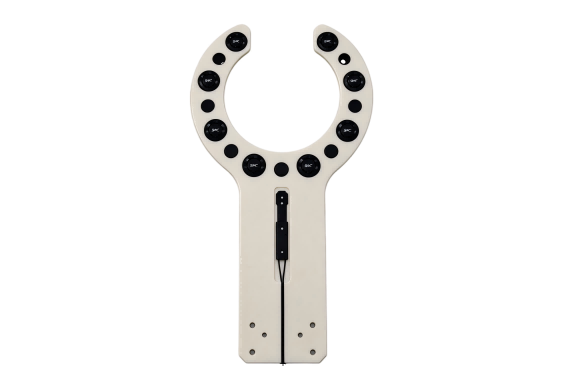
Bernoulli fingers are a type of non-contact or low-contact handling component that can be customized using processes such as alumina ceramics and additive manufacturing. The actual operating principle, gas-path structure, material grade, and applicable workpieces must be confirmed in conjunction with the equipment design.
Material: Alumina;
Name: Bernoulli finger;
Process: 3D printing, with any necessary sintering and post-processing;
Structure: Internal cavities, flow channels, and air outlets are designed according to the workpiece and air supply conditions;
Specifications: Outlet distribution, clearance, connections, surface finish, and cleanliness requirements are confirmed against the drawings.
Semiconductors: For processes such as wafer handling and lithography.
Electronics manufacturing: For precision handling tasks such as chip packaging and component sorting.
New energy: For cleaning and handling silicon wafers and battery cells.
Medical/Chemical: For handling soft, deformable, or mark-sensitive materials.
Optics: For gripping and transferring precision workpieces such as lenses.
Streamlined cavities and a well-designed air outlet distribution help reduce fluid resistance and improve the uniformity of the holding force; actual pressure drop and holding force must be tested. Integral forming can reduce joints and bonded interfaces, lowering the risk of contamination, delamination, and air leakage; airtightness and service life must be verified. Uniform airflow can help handle thin or warped workpieces to a certain extent, but suitability for workpiece deformation, air supply stability, and handling speed must be confirmed individually.
The design must define the air jet direction, outlet distribution, workpiece clearance, air supply pressure and flow rate, workpiece dimensions, and permissible deformation. Ceramic brittleness, edge protection, and cleanliness requirements must also be considered.
For a quotation, we recommend providing product drawings or sketches, critical dimensions and tolerances, material grade, operating temperature, load, media, assembly method, surface requirements, quantity, and inspection standards so that the material, structure, and manufacturing route can be confirmed.