ADVANCED CERAMICS
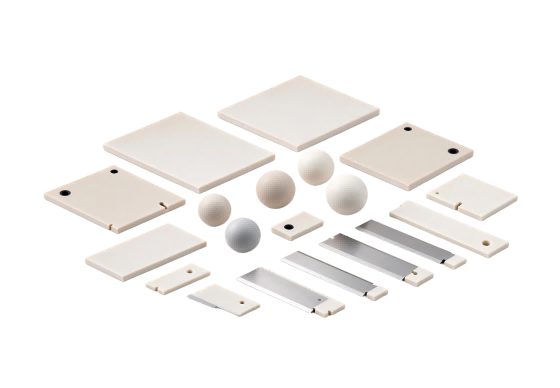
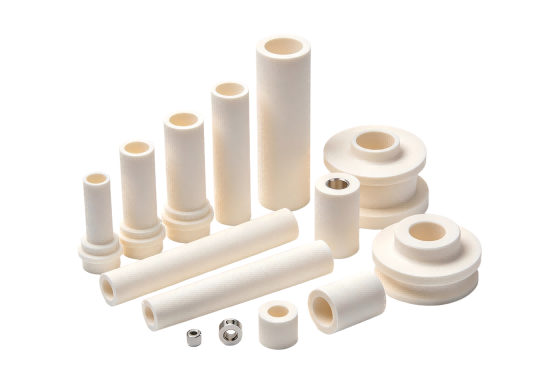
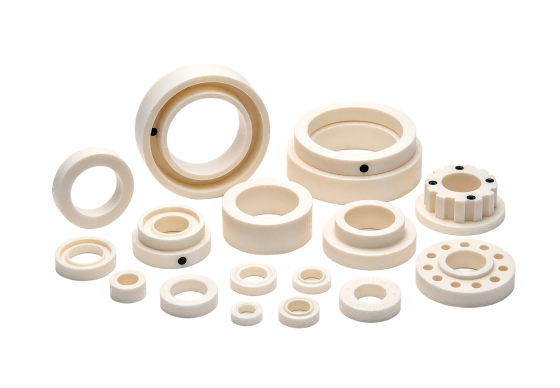
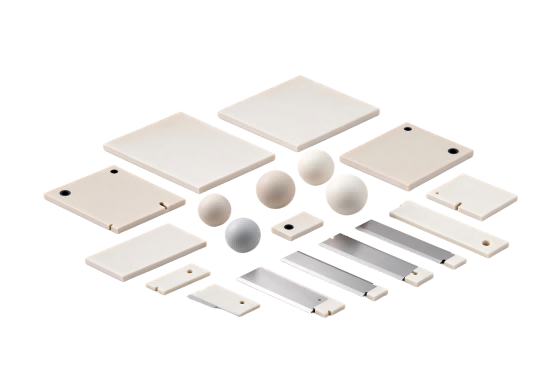
Alumina or zirconia structural ceramics in plate, ball, and blade forms can be considered for precision equipment components. Different shapes have different load conditions, critical surfaces, and machining requirements. The material grade, dimensions, and performance requirements must be confirmed based on the drawings, media, loads, and temperature.
Material: oxide ceramics, including alumina or zirconia;
Name: oxide ceramic structural components (plate/ball/blade);
Form: plate-shaped, spherical, or custom blade-type structures;
Processes: dry pressing, isostatic pressing, injection molding, tape casting, sintering, and precision machining as required; selected according to the part shape;
Specifications: dimensions, tolerances, sphericity, flatness, cutting edges, and surface requirements to be confirmed against the drawings.
Semiconductors: wear- or corrosion-resistant structures for processes such as wafer handling and lithography.
Electronics manufacturing: insulating and wear-resistant structures for chip packaging and component sorting.
New energy: corrosion-resistant components for processes such as silicon wafer cleaning and handling.
Medical/chemical: clean, corrosion-resistant structures for material transfer in cleanrooms.
Optics: high-precision structural components for lens clamping and transfer.
Alumina or zirconia ceramics provide a material basis for hardness, wear resistance, electrical insulation, or media resistance. Specific performance depends on the material system and surface condition. The range of plate, ball, and blade forms helps meet different structural requirements; however, plate-shaped parts require consideration of support and edges, spherical parts of diameter, sphericity, and contact surfaces, and blades of cutting edges and notches. In clean or demanding operating conditions, they can reduce the risk of metal contamination and electrochemical corrosion; actual temperature resistance, corrosion resistance, and service life require validation;
When selecting parts, confirm the thickness, support, and edges of plate-shaped parts; the diameter, sphericity, fit, and surface quality of spherical parts; and the cutting edge, notches, and localized loads of blades. Avoid impact and damage from interference fits during ceramic assembly.
For a quotation, please provide product drawings or sketches, critical dimensions and tolerances, material grade, operating temperature, loads, media, assembly method, surface requirements, quantity, and inspection standards so that the material, structure, and machining route can be confirmed.