ADVANCED CERAMICS
Silicon nitride structural components are designed for industrial applications with combined requirements for wear resistance, structural strength, thermal shock resistance, or electrical insulation. Selection can be evaluated based on part geometry, material system, and operating environment. Silicon nitride offers good hardness, wear resistance, strength, and fracture toughness, as well as low thermal expansion. Actual performance depends on material composition, manufacturing route, post-processing condition, and specific load, temperature, and media conditions.
Material: Silicon nitride ceramic; specific composition, material grade, and performance data must be confirmed for the product configuration.
Name: Silicon nitride ceramic structural component.
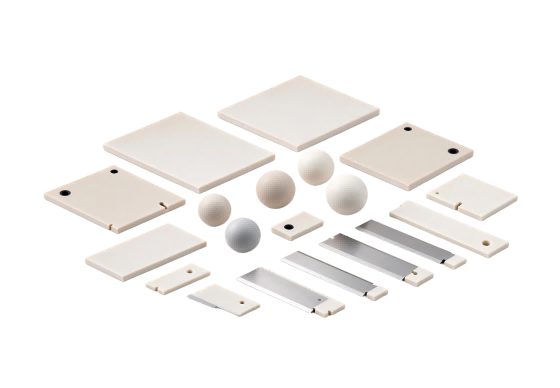
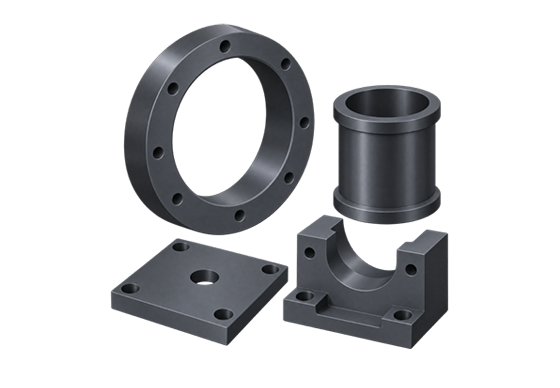
Form: Block, plate, ring, sleeve, or other custom geometries can be evaluated based on drawings; the actual shape is subject to the design documentation.
Manufacturing process: Ceramic forming, sintering, and subsequent precision machining routes are selected to suit the part structure, dimensions, and surface requirements.
Design considerations: Loads, temperature variations, media, assembly fit, support method, edge condition, and surface treatment requirements should be specified during the quotation or prototyping stage.
Industrial structural components such as wear-resistant bushings, guides, and locating components.
Components for high-temperature or temperature-cycling equipment requiring thermal shock resistance.
Structural isolation components requiring electrical insulation alongside mechanical support.
Custom ceramic support, clamping, or protective structures for semiconductor, electronics manufacturing, and precision equipment.
Non-standard structural components involving friction, wear, or media isolation in chemical, energy, and general industrial equipment.
Performance:
Under suitable load and friction conditions, silicon nitride's hardness and wear resistance can help reduce the risk of wear at structural contact points.
With appropriate structural design, support, and thermal cycling conditions, its low thermal expansion can help control the effects of temperature changes on dimensions and fit.
Ceramic electrical insulation provides a material option for equipment components requiring both mechanical support and electrical isolation; final performance must be verified through sample and system testing.
Structural Selection: Silicon nitride combines strength, hardness, fracture toughness, and wear resistance, making it suitable for evaluation in load-bearing or friction-contact applications. Its low thermal expansion and thermal shock resistance can be considered for structural designs subject to significant temperature variations, but the applicable operating range must be confirmed based on thermal cycling and assembly conditions. Structural solutions can be evaluated based on part geometry, mounting interfaces, holes and slots, and surface requirements; specific tolerances and machining capabilities are subject to drawing review. Ceramic materials are brittle, so design should account for risks such as sharp corners, abrupt changes in cross-section, notches, localized clamping, and stress concentrations. Part dimensions, tolerances, mounting method, operating temperature, loads, and media conditions must be confirmed against the drawings and actual operating conditions.
For a quotation, we recommend providing product drawings or sketches, critical dimensions and tolerances, material grade, operating temperature, loads, media, assembly method, surface requirements, quantity, and inspection standards to help confirm the material, structure, and machining route.