ADVANCED CERAMICS
Fiber Optic Ferrules
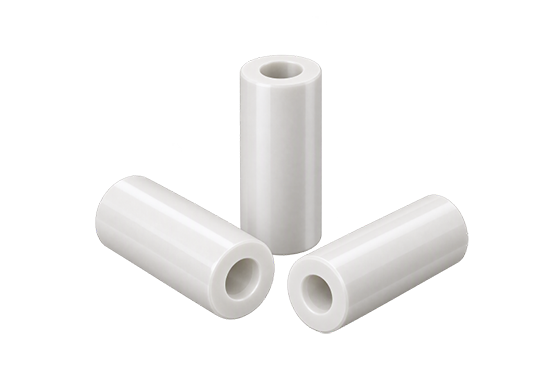
ZTA ceramic fiber optic ferrules provide precise alignment and secure positioning in fiber optic connectors, with bore and end-face dimensions controlled to drawing specifications.
Product Features
Zirconia-toughened alumina combines hardness and toughness.
Bore accuracy affects fiber fit.
End-face polishing and bore-axis eccentricity require particular attention.
Contact Us
Product Description
The ZTA-toughened ceramic fiber optic ferrule is made of zirconia-toughened alumina and is designed for precision alignment and retention in fiber optic connectors. The alumina matrix provides hardness, wear resistance, and dimensional stability, while the zirconia phase improves the material’s fracture toughness. The product’s bore precision, bore-to-axis concentricity, end-face geometry, and polishing quality affect fiber fit and connector optical performance. Actual insertion loss, return loss, and durability should be verified in conjunction with the connector design and complete assembly.
Basic Information
- Material: Zirconia-toughened alumina (ZTA) ceramic.
- Name: ZTA-toughened ceramic fiber optic ferrule.
- Product category: ZTA-toughened ceramics.
- Main structure: A ceramic ferrule with a precision bore and end face; the specific shape, bore diameter, length, and tolerances are subject to drawing confirmation.
- Process considerations: Ceramic forming, sintering, precision bore machining, and end-face polishing; the actual process route is evaluated according to the product structure and production volume.
- Selection criteria: Fiber specifications, connector interface, fit tolerances, end-face requirements, temperature variation, and mechanical loads.
Applications and Use
- Precision positioning and retention of optical fibers in fiber optic connectors.
- Ferrule/sleeve fit in single-mode or multimode fiber assemblies; specific specifications must be confirmed against the connector design.
- Alignment structures in optical transceivers and fiber interconnect assemblies.
- Pluggable fiber optic connector components in data centers, optical communications equipment, and test instruments.
- Precision optical assembly applications requiring ceramic wear resistance, electrical insulation, and dimensional stability.
Performance and Structural Selection
Performance:
- Stable bore and end-face geometry provides a basis for axial and radial fiber positioning, helping the connector maintain repeatable assembly consistency.
- The hardness, wear resistance, and toughened properties of ZTA can support structural reliability assessments under insertion/removal and long-term mating conditions.
- Appropriate control of bore-to-axis concentricity, end-face polishing, and assembly tolerances can help reduce connection loss, improve return loss performance, and maintain optical alignment; final performance must be confirmed through testing of the complete assembly or connector.
Structural Selection: ZTA composite material: Zirconia-toughened alumina is used as the material system to improve the fracture resistance of ceramic components while retaining alumina’s hardness and wear resistance.; Precision bore machining: The fiber optic ferrule bore is used to position and retain the fiber; bore diameter, roundness, straightness, and bore-to-axis concentricity requirements can be evaluated against the drawing.; Stable end-face geometry: End-face condition, coaxial alignment, and polishing quality are important structural factors for connector alignment; specific surface requirements must be confirmed in conjunction with the assembly plan.; Compatibility with precision connectors: Structural and material selection can be based on fiber type, sleeve design, assembly method, and operating environment, with custom evaluation available to drawing. Structural dimensions, tolerances, installation method, operating temperature, loads, and media conditions must be confirmed against the drawing and actual operating conditions.
Quotations and Customization
For a quotation, we recommend providing a product drawing or sketch, critical dimensions and tolerances, material grade, operating temperature, loads, media, assembly method, surface requirements, quantity, and inspection standards to help confirm the material, structure, and machining route.