
ADVANCED CERAMICS
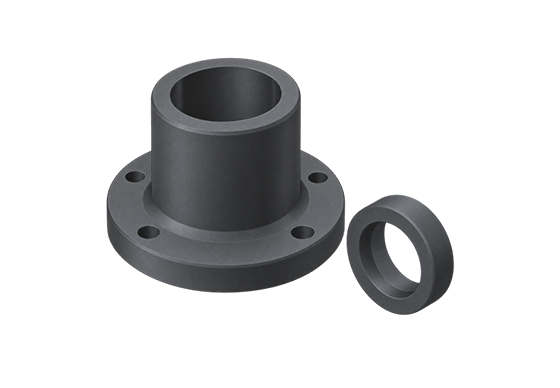
Silicon carbide structural components are designed to meet structural requirements for load-bearing, positioning, support, and environmental resistance in precision equipment. Their specific form and function must be evaluated in conjunction with part drawings, material systems, and operating conditions. Silicon carbide materials generally offer high hardness, thermal conductivity, and potential corrosion resistance, but performance varies among different sintered and reaction-bonded systems. During material selection, the load boundaries, temperature gradients, media conditions, mating method, and surface requirements should be clearly defined to inform material and structural design.
Product Name: Silicon Carbide Structural Components
Product Category: Silicon Carbide Structural Components
Primary Material: Silicon carbide (SiC); the specific sintered, reaction-bonded, or other material system is to be determined based on operating conditions
Product Form: Custom-engineered structural components; geometry, interfaces, and dimensions are evaluated based on drawings
Process and Inspection: Established according to structural complexity, dimensional tolerances, surface requirements, and operating environment; detailed technical requirements are subject to the documents confirmed by both parties
Support, positioning, and load-bearing structural components in precision equipment
Internal structural components for equipment operating at high temperatures or under temperature gradients
Process components exposed to chemical media or requiring corrosion resistance
Engineered ceramic components requiring wear resistance, structural stability, or thermal management
Custom silicon carbide parts for semiconductor, electronics manufacturing, and other precision equipment; suitability must be confirmed based on equipment and process conditions
Performance:
When the material system is matched to the operating conditions, it can provide a material basis for hardness, wear resistance, and dimensional stability in equipment structures.
Clearly defining loads, thermal gradients, and assembly boundaries helps improve the fit stability and operational reliability of structural components in precision equipment.
Selecting materials and designing surfaces to suit the media, temperature, and cleanliness requirements can help identify suitable options for long-term operation in demanding process environments; actual performance is subject to sample validation and acceptance criteria.
Structural Selection: Evaluate the material system against operating conditions: silicon carbide structural components can be made from an appropriate material system based on component function, temperature environment, chemical media, and loading conditions. The performance of different SiC systems should not be treated as equivalent.; Structural design tailored to custom requirements: engineering evaluation is available for part geometry, mounting method, support locations, holes and slots, and mating surfaces. Specific dimensions, tolerances, and structural details are subject to confirmation against the drawings; Consider thermal and mechanical boundaries: during the design stage, account for thermal gradients, impact risks, load direction, fixing method, and assembly preload to reduce the risk of localized stress in ceramic materials at sharp corners, notches, and hole edges; Designed for precision equipment: suitable for engineered ceramic structural components requiring a combination of wear resistance, corrosion resistance, or thermal management. Actual cleanliness, surface condition, and long-term stability must be confirmed based on the material and process. Structural dimensions, tolerances, mounting method, operating temperature, loads, and media conditions must be confirmed against the drawings and actual operating conditions.
For quotations, we recommend providing product drawings or sketches, critical dimensions and tolerances, material grade, operating temperature, loads, media, assembly method, surface requirements, quantity, and inspection standards to help determine the material, structure, and machining route.