
ADVANCED CERAMICS
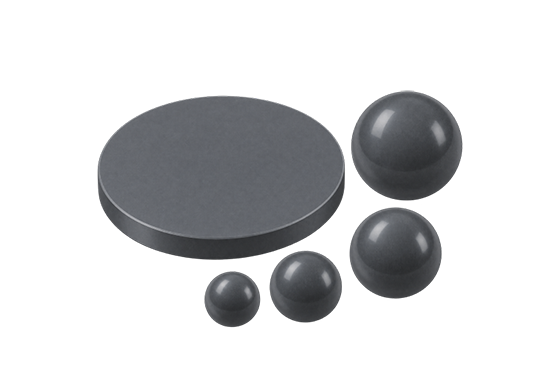
Plate/ball silicon carbide structural components are intended for the customization and selection evaluation of plate-shaped or spherical ceramic parts. Since the current name does not specify the function of the part, material grade, manufacturing route, or operating conditions, the actual design must be confirmed based on drawings, contact media, loads, temperature, and surface requirements. Silicon carbide is a non-oxide ceramic. Its hardness, thermal conductivity, and resistance to chemical environments vary with the material system, densification method, bonding phase, porosity, and surface condition; generic parameters cannot substitute for engineering selection.
Material: Silicon carbide ceramic (SiC); specific material grade, bonding phase, and densification method to be confirmed.
Product name: Silicon carbide plate/ball structural component.
Form: Plate-shaped or spherical; specific profile, dimensions, tolerances, and surface condition to be evaluated based on drawings or samples.
Manufacturing and machining: Forming, sintering, and ceramic finishing routes to be evaluated according to the shape and precision requirements.
Selection criteria: Intended use, contact media, operating temperature, loads, mounting method, and acceptance requirements must be provided.
Potential use as an equipment structural component requiring wear resistance or low-wear contact; the specific friction pair and loads must be verified.
Potential use as a plate-shaped ceramic component for heat transfer; heat flux, thermal cycling, and mounting constraints must be evaluated.
Potential use as a structural component in contact with chemical media or corrosive environments; media composition, concentration, and temperature must be confirmed.
Potential use as a spherical component for positioning, support, isolation, or sealing; the specific function and fit must be defined by the design.
Evaluation of custom ceramic components for semiconductor, photovoltaic, vacuum, or precision manufacturing equipment; the actual application must be validated in the equipment.
Performance:
When the silicon carbide material system is appropriately matched to the operating conditions, it can provide a ceramic component solution for wear resistance, thermal management, or media isolation designs.
Optimizing support, load distribution, and assembly relationships according to the plate-shaped or spherical geometry can help control localized stress and reduce the risk of edge damage.
When drawings, surface condition, and acceptance requirements are clearly defined, the fit between the component and equipment interfaces and the assessment of batch consistency can be improved.
Structural Selection: Plate-shaped or spherical forms can be evaluated according to the definition of the specific part. The profile, thickness or diameter, edges, and surface requirements are subject to the drawings; silicon carbide ceramic is the basis for material selection, while the specific material system, purity, bonding phase, and manufacturing route must be confirmed against the operating conditions. Requirements such as wear resistance, thermal conductivity, resistance to chemical environments, or dimensional stability can be included in a comprehensive evaluation, but actual performance depends on the material and structural design. Ceramic component design should account for notches, holes and slots, corners, support, assembly clearance, and localized loads to reduce the risk of damage to the brittle material. Structural dimensions, tolerances, mounting method, operating temperature, loads, and media conditions must be confirmed against the drawings and actual operating conditions.
For quotation requests, we recommend providing product drawings or sketches, critical dimensions and tolerances, material grade, operating temperature, loads, media, assembly method, surface requirements, quantity, and inspection standards to facilitate confirmation of the material, structure, and machining route.