
ADVANCED CERAMICS
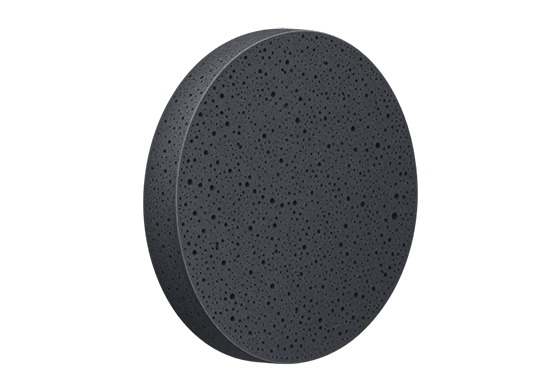
Microporous silicon carbide ceramic discs are based on porous SiC and are designed for evaluating components that require gas or liquid flow while relying on a ceramic substrate for support. The porosity, pore size distribution, and connectivity of the porous structure affect fluid throughput, filtration performance, and mechanical strength. Actual resistance to process media, load-bearing capacity, and operating limits must be confirmed based on the material system, pore structure, and specific operating conditions.
Product name: Microporous silicon carbide ceramic disc.
Material type: Porous silicon carbide (SiC) ceramic; the specific material system must be confirmed for the application.
Product form: Disc; outer diameter, thickness, pore structure, and edge condition are confirmed against the drawing and requirements.
Structural considerations: Pore connectivity, pore size distribution, flatness, support method, sealing area, and risk of edge chipping.
Information for product selection: We recommend providing the process media composition, temperature, pressure or differential pressure, target flow rate/filtration requirements, installation method, and quantity.
Evaluation of candidate structures for high-temperature gas filtration components.
Evaluation of porous ceramic disc options for liquid filtration or media separation assemblies.
Gas-permeable, flow-distribution, or gas-passing components in equipment.
Porous support or isolation structures requiring a certain load-bearing capacity.
Microporous ceramic components custom-designed for the media, temperature, and differential pressure in laboratory apparatus and industrial equipment.
Performance:
Matching pore connectivity to the target media provides a structural basis for fluid flow and filtration; actual throughput and retention performance must be confirmed by testing.
The silicon carbide substrate can provide heat- and corrosion-resistant material properties under appropriate temperature and media conditions; specific operating limits must be validated under actual service conditions.
Appropriate design of support, sealing, and load application can help reduce the risk of localized stress caused by differential pressure, clamping, and thermal changes.
Structural selection: Porous SiC structures provide a material and form basis for filtration, gas permeability, or porous support; specific permeability must be confirmed based on the pore structure. Silicon carbide ceramic features heat resistance, corrosion resistance, and thermal conductivity; actual performance depends on the material formulation, manufacturing route, and service media. The disc form facilitates engineering evaluation of diameter, thickness, flatness, edge support, and sealing areas. Structural safety and suitability under differential pressure loads, temperature changes, and localized clamping can be evaluated based on the drawing and operating conditions. Structural dimensions, tolerances, installation method, operating temperature, load, and media conditions must be confirmed against the drawing and actual operating conditions.
For a quotation, we recommend providing a product drawing or sketch, critical dimensions and tolerances, material grade, operating temperature, load, media, assembly method, surface requirements, quantity, and inspection standards to help determine the material, structure, and manufacturing route.